
Why is Gold Falling Despite High Inflation?
Gold is supposed to be a safe haven during inflation, so why is it falling when interest rates are high? Explore how rising yields, a stronger dollar, and shifting investor sentiment can challenge conventional market wisdom.
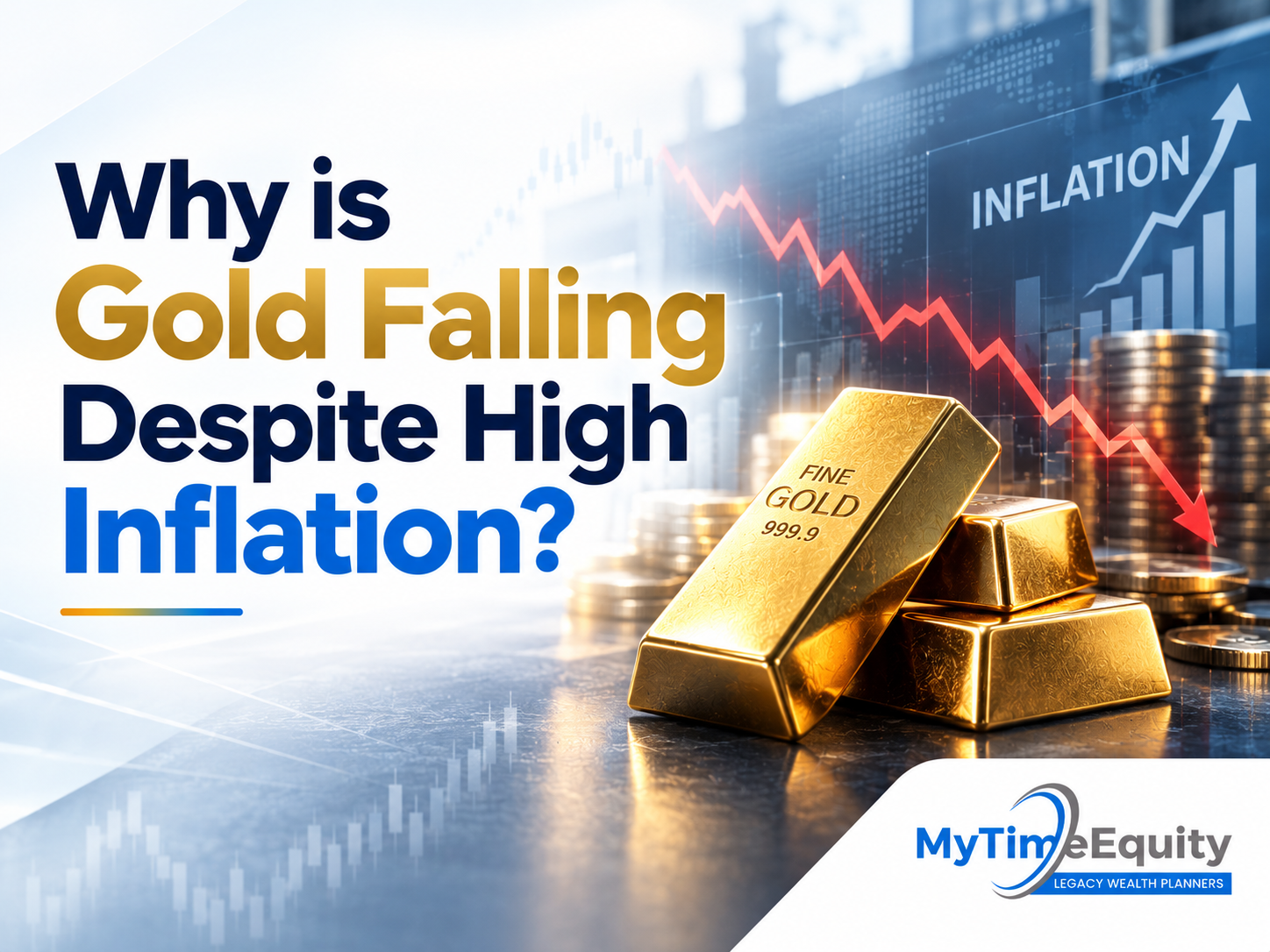
Gold is often seen as a safe haven during inflation and economic uncertainty. So why can its price fall even when inflation remains high and interest rates are rising? The answer lies in how investors respond to changing economic conditions. Gold doesn't automatically rise when uncertainty increases. Its performance depends on interest rates, the U.S. dollar, and how attractive other investments become.
Why High Interest Rates Can Hurt Gold
When inflation stays high, central banks may keep interest rates elevated to control rising prices. This can make bonds more attractive because they offer interest income, while gold does not. Rising U.S. Treasury yields can therefore encourage investors to shift money away from gold. A stronger dollar can add further pressure by making gold more expensive for international buyers.
Does This Mean Gold Is No Longer a Safe Haven?
Not necessarily. Gold can still provide diversification and may benefit when investors lose confidence in currencies or seek protection from financial instability. However, when rising yields and a stronger dollar outweigh safe-haven demand, gold can fall even during uncertain times. Recent price movements also show that long-term buyers and short-term traders can behave differently, creating pressure on prices even when demand remains healthy.
What Should Investors Understand?
The key is to look beyond inflation alone. Real interest rates, dollar movements, central-bank purchases, and investor positioning all influence gold. An inflation shock that pushes yields higher can hurt gold, while falling real yields or concerns about currency stability may support it. No single indicator tells the whole story.
The Takeaway
Gold isn't guaranteed to rise whenever the economy struggles. Its price reflects how investors weigh competing forces, including inflation, interest rates, and alternative investment opportunities. Rather than assuming high inflation means higher gold prices, investors should consider whether gold is becoming more attractive relative to other assets.
Let's Talk
Want to understand how gold and other assets fit into your investment strategy? Reach out to wealth@mytimeequity.com or Join the MyTimeEquity WhatsApp Group for ongoing market updates and direct access to our team.
Disclaimer: MyTimeEquity is a registered investment adviser. Information shared is for educational and informational purposes only and should not be construed as investment, legal, tax, or accounting advice, or as a recommendation to buy or sell any security. Views expressed are subject to change without notice.