MTE Fixed-Term Liquidity: Borrowing Against Your Portfolio, Reimagined
Need cash for a home, a deal or a tax bill? Here's how to borrow against your portfolio without selling it or taking on monthly payments.
Liquidity without selling
Sooner or later, most investors need cash: a down payment, a business opportunity, a tax bill, or a family commitment. The usual choices are frustrating. Selling investments can trigger capital gains and pull you out of the market. Traditional loans come with monthly payments, credit underwriting, and interest that is often hard to deduct.
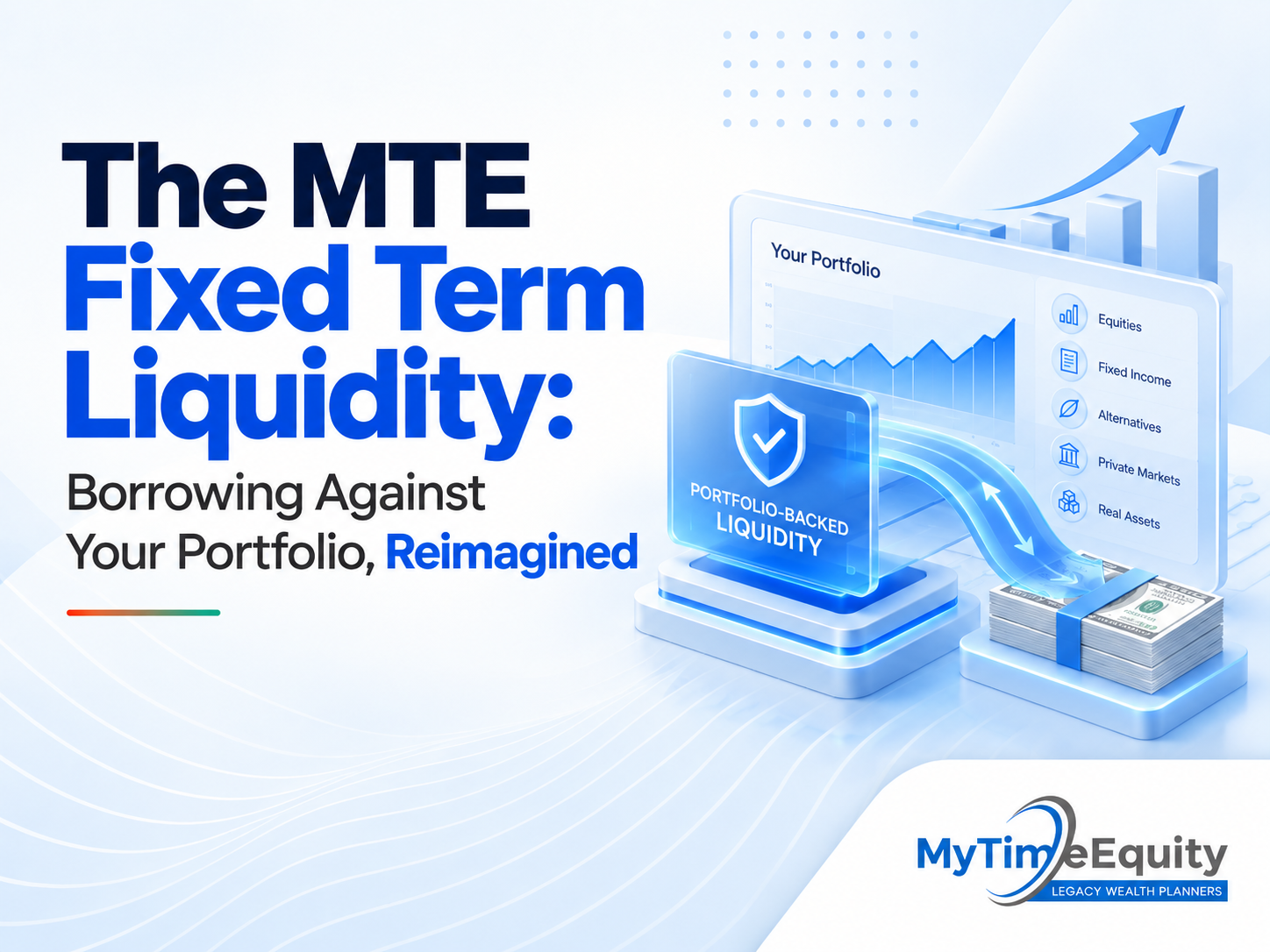
MTE Fixed-Term Liquidity is a new way for MyTimeEquity clients to borrow against the portfolio they already own, held in their own Schwab account, while staying invested.
How it works
Instead of borrowing from a bank, MTE Fixed-Term Liquidity raises cash in the listed options market. We place a pre-defined combination of exchange-listed, European-style index options (settle only at expiration) in your account. Together they lock in a fixed amount payable at a set future date, and you receive cash today. The difference between the two is your effective borrowing cost.
- Your existing portfolio stays invested and serves as collateral.
- You receive cash up front in your Schwab account.
- No scheduled payments are due until the options expire, on a term you choose of up to five years.
- At expiration, the position settles in cash and the loan is repaid. You repay using cash in the account, by rolling into a new position at then-current rates, or by selling holdings.
The trades are executed with established institutional partners that specialize in this structure, and they are cleared through the Options Clearing Corporation rather than a single lender.
Four features that set it apart
1. Institutional-level rates. Because pricing comes from the options market, borrowing costs have historically tracked close to U.S. Treasury yields. In today's environment, rates can be as low as about 5%, often below typical securities-based lines of credit. Rates are set when the trade is placed, vary with market conditions and term, and are not guaranteed.
2. Jumbo sizing. Loan size is driven by the value of your eligible portfolio and your account's margin approval, not a bank's lending cap. Qualified clients can access substantial amounts.
3. No monthly payments. The borrowing cost is not paid monthly. Principal and the built-in borrowing cost are settled together at the end of the term, which can be up to five years. You keep your monthly cash flow free.
4. Potential capital-loss treatment. With a conventional loan, interest is often non-deductible or limited. Investment interest, for example, is deductible only up to net investment income and only if you itemize. Here, the borrowing cost generally shows up as a capital loss on the options position. The index options used are typically Section 1256 contracts, taxed 60% long-term and 40% short-term and marked to market each year. Capital losses can offset capital gains, plus up to $3,000 of ordinary income per year, with the rest carried forward.
Who it may suit
MTE Fixed-Term Liquidity may be a fit for investors with a sizable taxable portfolio who want liquidity without selling appreciated holdings. Common uses include:
- A home purchase, bridge financing, or a real estate down payment
- Funding a private investment or business opportunity
- Paying a large tax bill without liquidating positions
- Refinancing higher-cost margin or securities-based debt
- Covering major family expenses, such as education or a wedding, on a flexible timeline
What to weigh before borrowing
Borrowing against investments is leverage, and it is not right for everyone. Key considerations:
- Market risk and margin calls. If your portfolio falls, you may need to add cash or securities, or positions may be sold, possibly at an inopportune time.
- Account approvals. The strategy requires options and margin approval, and larger amounts may require portfolio margin. Not every client or account will qualify.
- Fixed term. The cost is locked at the start. Rates could fall later, and closing early may involve trading costs or a less favorable price.
- Refinancing at maturity. If you want to extend beyond the term, a new position is placed at then-current rates.
- Tax outcomes vary. The tax treatment described depends on your situation and current law, which can change. Please review with your CPA before proceeding.
- Leverage amplifies results. Investing borrowed money can increase losses as well as gains.
Getting started
If you are considering a major purchase, a new investment, or refinancing existing debt, talk to us before you sell. We will review your portfolio, check eligibility, show you an indicative rate for your term and size, and coordinate with your tax advisor.
Schedule a conversation with the MyTimeEquity team to see whether MTE Fixed-Term Liquidity fits your plan. Email us at wealth@mytimeequity.com or call (972) 330-2771 to get more details.